


Basic processes and experimental psychopathology
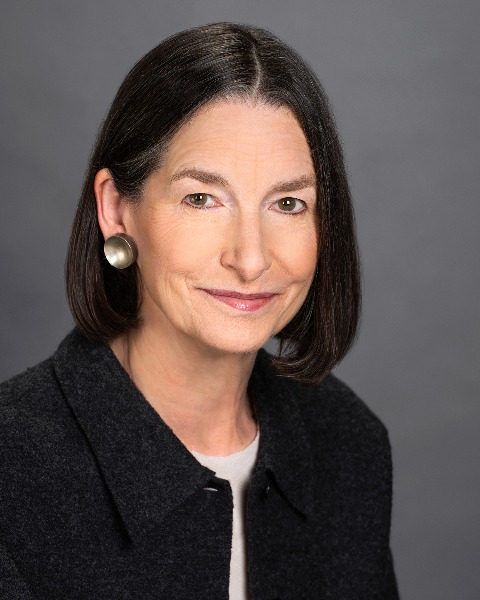
Jacqueline Persons, Ph.D. (she/her/hers)
Director
Oakland Cognitive Behavior Therapy Center
Oakland, California, United States
Michelle Craske, Ph.D.
Distinguished Professor
University of California Los Angeles
Los Angeles, California, United States
Erin Moran, Ph.D. (she/her/hers)
Washington University in St. Louis
Saint Louis, Missouri, United States
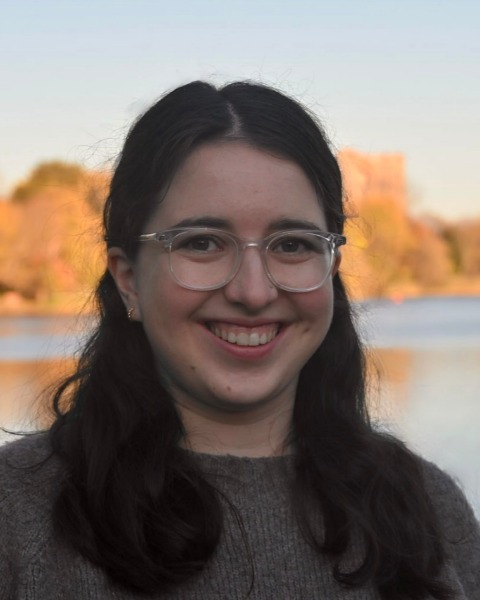
Sarah Dolan, M.A. (she/her/hers)
Predoctoral Intern
University of California San Francisco
San Francisco, California, United States
Jacqueline Persons, Ph.D. (she/her/hers)
Director
Oakland Cognitive Behavior Therapy Center
Oakland, California, United States
This symposium features three empirical papers on the topic of anhedonia and commentary on the papers by a senior investigator who recently developed a new CBT to increase positive affect. The first paper, presented by an early career academic at a midwestern university, presents data looking at anhedonia om schizophrenia, bipolar disorder, depression, and healthy controls using a multi-method approach, including assessment via clinical interviews and real-time ecological momentary assessment EMA) ratings. She reports data indicating that EMA provides more nuanced information about anhedonia that may improve diagnostic precision and strengthen personalized treatment. The second presenter is a clinical psychology trainee at University of California San Francisco; she presents her data examining the relationship between anhedonia and reinforcement functions of restrictive eating in anorexia nervosa. She reports that global depression severity rather than anhedonia specifically may motivate reinforcement processes from restrictive eating. The final paper is by a group of investigators that includes two senior investigators, an early career scientist and a postbaccalaureate student, including an academic and 3 investigators who work in a clinical setting. Their paper presents longitudinal data from three samples of depressed patients treated with CBT, a naturalistic sample of patients treated in routine practice and two samples of patients treated in randomized controlled trials. The investigators assess changes in anhedonia in all 3 of the samples and changes in high energy positive affect in the naturalistic sample. They report that depressed patients treated with CBT appear to show improvements in symptoms of anhedonia but do not change in high energy positive affect.
Speaker: Erin Moran, Ph.D. (she/her/hers) – Washington University in St. Louis
Co-Author: Adam Culbreth, PhD (he/him/his) – University of Maryland School of Medicine
Co-Author: Deanna Barch, PhD (she/her/hers) – Washington University in St. Louis
Speaker: Sarah Dolan, M.A. (she/her/hers) – University of California San Francisco
Co-Author: Kira Venables, B.A. (she/her/hers) – Virginia Commonwealth University
Co-Author: Lisa M. Anderson, Ph.D. (she/her/hers) – University of Minnesota Medical School
Co-Author: Scott Crow, MD – University Minnesota Medical School
Co-Author: Ann F. Haynos, Ph.D. (she/her/hers) – Virginia Commonwealth University
Speaker: Jacqueline B. Persons, Ph.D. (she/her/hers) – Oakland Cognitive Behavior Therapy Center
Co-Author: Ann Kring, Ph.D. (she/her/hers) – University of California, Berkeley
Co-Author: Garret G. Zieve, Ph.D. (he/him/his) – Oakland Cognitive Behavior Therapy Center
Co-Author: Mateo Lopez, B. A. (he/him/his) – Oakland Cognitive Behavior Therapy Center